Blogs
The Cost of Saying Nothing: What a 5-Year-Old PRE Taught Me About Listening
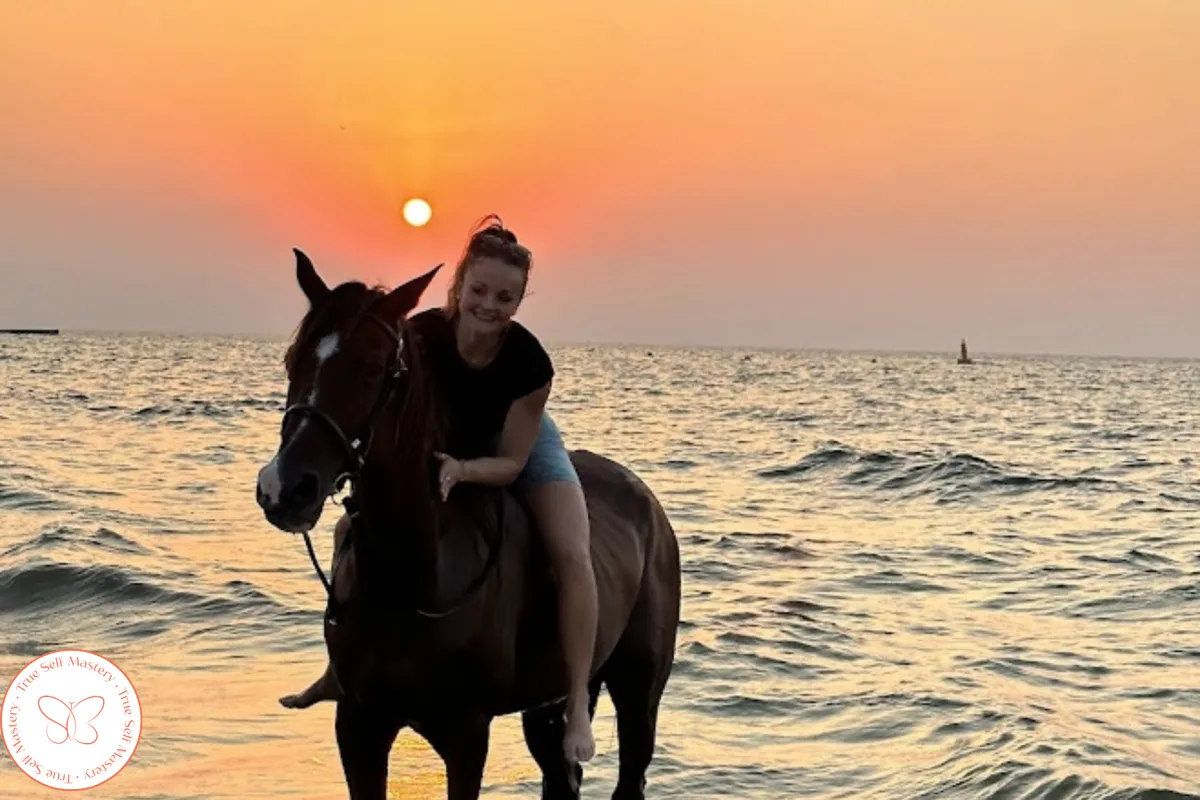
I recently met a 5-year-old PRE mare.
She was big—if she were a dog, she’d be a bouncy Labrador. Like Bambi on ice. My hands couldn’t even reach her withers, but she was gentle, with wide, curious eyes and a clear bond with her rider.
On the right rein, she was tilting her head.
The owner had already tried the dentist and changing the bit. Nothing had worked. When a horse shows a persistent physical symptom like a head tilt, the instinct is to jump straight into palpating and treatment. We want to find the "spot" and fix it.
But treatment without a framework is just guessing.
Instead of starting with my hands, I used the process I teach in The Horse Listener: Observe → Ask → Test → Adjust.
The Observation
I watched her in the stable, on the lunge, and under saddle. I asked questions until the rider had nothing left to tell me.
The pattern became apparent:
- She only tilted her head when the rider was up.
- She only did it on the right rein.
The Test
To confirm the cause, we switched riders. A different person got into the saddle and took her onto the right rein.
The head tilting stopped.
Through this process of elimination, we found the cause. It wasn't the horse’s teeth or her skeleton. It was the rider’s right shoulder.
She wasn't doing it intentionally. She had been experiencing sharp pain down her right side, and to avoid the pain of the rein slipping, she was squeezing her right hand with significant force.
The Messenger, Not the Problem
Because we approached the session with a grounded framework, the rider didn't feel blamed. She felt informed. She realized her horse wasn't "broken"—the mare was simply mirroring the tension in her own body.
She went to see a human physio that week. The day after her treatment, she rang me:
"She isn't head tilting anymore."
If we had jumped straight to treating the mare, we would have missed the message. We might have provided temporary relief, but the problem would have returned the moment the rider picked up the reins.
In many cases, the horse is simply the messenger for what we are bringing into the arena.
Stop Guessing
This is the power of a repeatable framework. When you know how to Observe, Ask, Test, and Adjust, you stop chasing symptoms and start finding the source.
You stop seeing your horse as a collection of problems to be solved and start seeing them as a partner in a conversation.
Are you ready to stop guessing and start truly hearing what your horse is trying to tell you?
In The Horse Listener, I teach you the exact steps to navigate these moments with clarity and confidence.
Explore The Horse Listener Program]: https://nikavorster.com/evergreen-webinar-register